
Key takeaways
- Overbooking is a long-standing revenue strategy that helps hotels offset no-shows and cancellations to maximize occupancy.
- Intentional overbooking relies on accurate forecasting and historical data to protect revenue without harming the guest experience.
- Accidental overbooking is an operational failure, often caused by system issues or manual errors and can damage guest trust.
- Technology plays a critical role in overbooking success by providing real-time availability and reducing inventory discrepancies.
- Systems like Mews enable smarter overbooking through centralized data, automation and better decision-making.
Overbooking in hotel management is a long-standing, widely used practice - and an equally divisive one. Many hoteliers consider it a necessary evil: a practical defence against cancellations and no-shows. Yet it sits uncomfortably with most managers, especially during peak periods when you're forced to walk guests and face the fallout. Empty rooms due to late cancellations hurt your margins, but overbooking mishandled can have the same effect on guest loyalty.
To protect against this, many hotel and revenue managers rely on an overbooking strategy to maximise occupancy and revenue without sacrificing guest satisfaction. In this guide, we'll explore what overbooking really means, why it remains a core hotel management tactic and the strategies that help hotels execute it effectively and responsibly.
What is hotel overbooking?
Hotel overbooking is the practice of accepting more reservations than the number of rooms available. While it may sound risky, overbooking is a common revenue management strategy used to offset the impact of cancellations, no-shows and early departures.
Hotels rely on historical booking data to estimate how many guests are unlikely to arrive. By carefully overbooking within predictable limits, properties can maintain higher occupancy levels and reduce the revenue lost from empty rooms.
When managed effectively, overbooking helps maximize room revenue without negatively affecting the guest experience. However, if more guests arrive than expected, hotels may need to relocate guests to another property, making accurate forecasting and operational planning critical to success.

What causes hotel overbooking?
Hotel overbooking can happen intentionally as part of a revenue management strategy or unintentionally due to operational challenges. In both cases, the result is the same: more confirmed reservations than available rooms.
Cancellations and no-shows
The most common reason hotels overbook is to compensate for expected cancellations and no-shows. Historical data often reveals predictable booking patterns, allowing hotels to accept additional reservations without significantly increasing risk.
Booking system errors
Technology issues can occasionally lead to overbookings. Delayed inventory updates, synchronization problems between systems or connectivity issues with distribution channels can result in the same room being sold multiple times.
Channel management issues
Hotels that sell rooms across direct booking channels, online travel agencies (OTAs) and wholesalers rely on accurate inventory updates. If availability is not updated in real time across all channels, overselling can occur.
Unexpected stay extensions
Guests sometimes extend their stays beyond their original departure date. If the hotel has already sold those rooms to arriving guests, availability can become constrained and lead to overbooking situations.
Human error
Manual reservation management, incorrect room assignments and inventory mistakes can all contribute to overbookings, particularly when processes are not automated.
Modern hospitality systems help reduce unintentional overbookings by keeping inventory synchronized across channels, providing real-time visibility into room availability and automating reservation management workflows.
What is a hotel overbooking strategy?
A hotel overbooking strategy involves selling slightly more rooms than are physically available to account for predictable no-shows, cancellations and early departures. Like airlines, hotels rely on data and forecasting to oversell carefully without impacting the guest experience.
What are the benefits of overbooking in hotels?
When executed correctly and backed by accurate data, overbooking can be a powerful, cost-effective revenue strategy. Here are its main advantages.
Minimize revenue losses
Overbooking acts as an insurance policy against cancellations. If your hotel refuses new bookings because the system shows "full," but several rooms end up empty due to last-minute cancellations or no-shows, you miss out on revenue unnecessarily.
Achieve full occupancy
Because hotel rooms are perishable inventory - once the day passes, the revenue potential is gone - overbooking provides a controlled way to push occupancy closer to 100%. When managed carefully, this can lift your profit margin significantly, especially during high-demand periods.
Cost-effective compensation
If a guest arrives and their room isn't available, hotels commonly arrange alternative accommodation at a nearby hotel of a similar category. If this partnership is pre-arranged, the process is smoother for both staff and guests.
With shuttle transport, communication support and possibly a discount on a future stay, the overall cost is usually outweighed by the extra revenue gained from full occupancy.
Data-driven predictions
The evolution of hotel software means you no longer need to rely on gut feeling to create an overbooking strategy.
Modern PMS platforms and revenue tools can analyse historical patterns, seasonal cancellation rates, walk-in behaviours, loyalty trends and overstay tendencies. This helps determine the safest and most profitable level of overbookings, transforming what was once a high-risk tactic into a controlled, data-informed strategy.

What are the risks of hotel overbooking?
Overbooking hotel rooms isn't without its drawbacks. Even a well-planned strategy can create challenges, and hotels must weigh these risks carefully.
Negative guest experiences
In many ways, this point speaks for itself. Imagine a scenario where a customer makes a reservation, arrives at the hotel to find there's no room and then has a terrible experience getting alternative accommodation.
This can be a particularly bad scenario if it's a large family or a guest whose special needs will not be catered to by the alternative hotel. It could also be an irredeemable misstep if the customer you turn away is a loyal one, someone who has used your services for years.
Reputation and publicity risks
If your hotel overbooking strategy fails, you could end up with negative reviews, social posts and online feedback that heavily influences future bookings.
Fortunately, cloud-based property management systems make it easier to organize guest bookings and cancellations, ensuring accuracy and minimizing hazards.
Operational challenges
Hotel overbooking situations can lead to a lot of unnecessary stress on staff, especially during peak seasons.
Managing last-minute changes like having to walk guests to a nearby property can take time away from paying guests, reducing service efficiency and amplifying stress.
Clear internal processes and proper hotel staff training are key to maintaining service standards during these moments.
Legal and compliance considerations
Consumer protection laws around overbooking in the hotel industry vary by region, but in the EU and USA, a confirmed hotel reservation is considered a contractual agreement.
If a hotel can't honor a booking, it must refund prepaid services and arrange comparable alternative accommodation (the process known as "walking" a guest), covering the first night's stay and transportation. APAC markets follow similar principles, but specifics differ by country. Hotels must understand these obligations fully to remain compliant.
How to create a successful overbooking strategy
As mentioned above, overbooking is a tricky task that should be carefully managed. Here are some ideas on how to cope with overbooking in a hotel to prevent loss of profits and guests.
1. Use big data for accurate predictions
Big data analysis is one of the best predictive methods you can use. By looking at all your reservations and customer activities, you may be able to accurately estimate the number of overbookings to allow. You can also determine the ideal compensation for guests you have to turn away or redirect to retain their loyalty.
2. Maintain a detailed guest list
It's important to have a check-in list that identifies guests with guaranteed bookings versus those who have not confirmed arrival. Automating these confirmations through systems like Mews ensures accuracy and reduces guest frustration.
3. Choose potential book-outs wisely
When deciding whom to walk, choose carefully. Avoid long-term loyal guests, guaranteed bookings and high-paying reservations - walking these guests can create lasting damage. Instead, prioritise lower-rated or non-guaranteed bookings.
4. Establish partnerships with neighboring hotels
This strategy allows you to always have a trustworthy alternative for any customer who has to be offered alternative accommodation. When you are partnering, preferably with hotels in the same star category, you will have the opportunity to ensure that they provide services that are in line with what your clients would have expected of you.
5. Create standard operating procedures (SOPs) for overbooking
One of the best ways to ensure hotel guest satisfaction isn't compromised with the practice of overbooking is to create a hotel standard operating procedure that covers:
- Forecasting rules
- Communication guidelines
- Walking procedures
- Compensation policies
- Escalation protocols
- Post-incident reviews
Clear SOPs minimize confusion and maintain consistency across shifts and staff.
6. Train front desk staff on overbooking management
Overbooking situations can be emotionally charged. Equip staff with scripts, communication frameworks, de-escalation techniques, and role-play scenarios. Confidence and empathy at the desk can turn a frustrating moment into one that still preserves loyalty and the guest experience.
7. Plan guest compensation in advance
To maintain guest satisfaction during overbooking, make sure you clearly define your compensation options: room upgrades, meal vouchers, transport, loyalty points, discounted future stays.
Having these options clearly documented can help empower staff to act confidently to resolve overbookings.
8. Use technology to manage overbooking
Successfully managing overbooking requires accurate, real-time visibility across your entire operation. When inventory, reservations, guest data and distribution channels are disconnected, the risk of accidental overbookings increases. Connected hospitality technology helps hotels monitor demand, automate processes and make more informed decisions.
Here's how technology supports a successful overbooking strategy:
- Real-time inventory management: Keep room availability accurate across your hotel PMS and channel manager to reduce the risk of overselling due to manual errors or delayed updates.
- Automated distribution: Ensure availability and rates are synchronized across OTAs, direct booking channels and other distribution partners.
- Demand forecasting: Use historical performance, booking pace and market trends to predict occupancy levels and determine safe overbooking thresholds.
- Guest and reservation visibility: Access up-to-date reservation and guest information to quickly identify opportunities and respond to operational challenges.
- Automated workflows: Streamline guest communications, room assignments and operational processes when occupancy levels change.
As a hospitality operating system, Mews brings these capabilities together in a single cloud-native system. Rather than relying on separate systems for property management, distribution, payments and revenue management, hotels can manage operations from one connected solution.
With Mews, hotels benefit from:
- Real-time inventory visibility across booking channels
- Integrated revenue management and demand forecasting
- Automated guest communications and payments
- Connected front-office, housekeeping and operational workflows
- Open APIs and 1,000+ integrations that keep data flowing across the entire business
By connecting every part of hotel operations, Mews helps teams confidently manage occupancy, reduce manual work and execute overbooking strategies with greater accuracy and control.
Conclusion
Overbooking has helped hotels maximize occupancy and revenue for decades, but it only works when it’s guided by accurate data and disciplined execution. Without the right systems in place, overbooking can quickly shift from a smart revenue strategy to a source of guest dissatisfaction and reputational risk.
The right hotel management systems give your team the visibility and control to overbook more confidently, protect revenue and keep the guest experience intact.
Get a demo to see how Mews helps hotels manage overbooking with greater accuracy and less operational friction.
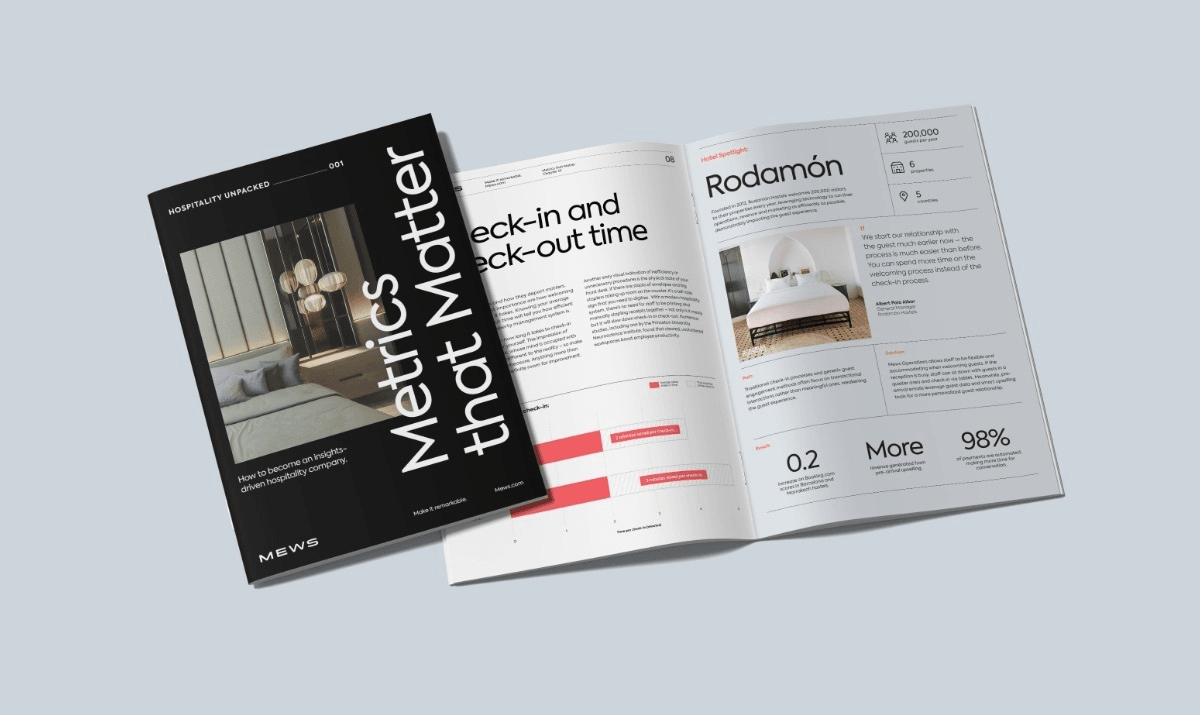
Want to know which definitive hospitality metrics you should be tracking and why?
Download our guide 'The Metrics that Matter'
What is hotel overbooking?
What is hotel overbooking?
Hotel overbooking is the practice of accepting more reservations than the number of available rooms, based on the expectation that some guests will cancel, not show up or check out early.
Why do hotels use an overbooking strategy?
Why do hotels use an overbooking strategy?
Hotels use overbooking to protect revenue from unsold rooms, which are perishable inventory. When managed correctly, it helps maximize occupancy and revenue without impacting the guest experience.
What is the difference between intentional and accidental overbooking?
What is the difference between intentional and accidental overbooking?
Intentional overbooking is planned and data-driven, based on historical booking patterns and forecasts. Accidental overbooking happens due to operational issues like system errors, outdated inventory or manual mistakes.
What happens if a hotel overbooks my room?
What happens if a hotel overbooks my room?
If a hotel is overbooked and cannot accommodate all arriving guests, it may need to relocate some guests to another nearby property. This process, often called "walking a guest," typically involves arranging alternative accommodations and may include additional compensation depending on the hotel's policies and local regulations.
Most hotels take steps to avoid these situations by using forecasting tools, monitoring occupancy trends and managing room inventory in real time. While overbooking is a common revenue management practice, successful hotels carefully balance occupancy goals with guest satisfaction.
How can hotels reduce overbooking?
How can hotels reduce overbooking?
Hotels can reduce overbooking by combining accurate demand forecasting with real-time inventory management. Modern property management systems help keep room availability synchronized across booking channels, reducing the risk of duplicate bookings and inventory discrepancies.
Hotels can further minimize overbooking by monitoring cancellation patterns, managing distribution channels centrally and automating reservation updates. With the right technology and processes in place, properties can maximize occupancy while maintaining a positive guest experience.
Written by

Eva Lacalle
Eva has over a decade of international experience in marketing, communication, events and digital marketing. When she's not at work, she's probably surfing, dancing, or exploring the world.