
Key takeaways
- Housekeeping improvement plans accelerate room turnaround, enabling earlier check-ins and higher occupancy potential.
- Automated scheduling and real-time reporting streamline coordination between housekeeping and front desk teams.
- Tracking clear KPIs reveals productivity gaps and supports smarter staffing decisions during peak demand.
Your housekeeping department's performance plays a big role in your hotel's success. A dirty room can significantly impact your guest satisfaction scores and online reviews while a more productive housekeeping team enables faster room turnovers, earlier check-ins and higher occupancy rates – directly boosting revenue.
To meet these demands, housekeeping teams are increasingly adopting new technology to increase efficiency and provide a seamless guest experience. In this article, we outline practical strategies to improve housekeeping productivity and show how technology can support more efficient operations.
What is a housekeeping improvement plan in hotel operations?
A housekeeping improvement plan provides structured strategies to optimize cleaning workflows and staff productivity. Properties use these plans to identify bottlenecks and implement solutions that reduce turnaround times.
The plan typically addresses technology adoption, training protocols and communication systems. Hotels that implement improvement plans report faster room readiness and higher guest satisfaction scores.
The role of housekeeping in hotel operations
Housekeeping teams directly control when rooms become available for new arrivals. Their efficiency determines your ability to accommodate early check-ins and maximize daily occupancy rates.
This department also shapes guest perceptions through room cleanliness standards. A well-functioning housekeeping operation becomes your competitive advantage in online reviews.
Why hotel room housekeeping impacts productivity
Housekeeping performance directly affects how efficiently your hotel operates and how much revenue you generate. Its impact shows up across several operational areas:
- Room readiness drives revenue: Delays in cleaning reduce selling time, limit early check-ins and restrict occupancy potential.
- Front desk efficiency depends on turnover speed: When rooms aren’t ready, teams face bottlenecks and guests are forced to wait.
- Faster turnaround creates upsell opportunities: Efficient operations enable flexible check-in options and help capture same-day bookings.
8 tips to improve housekeeping in hotel departments
Effective housekeeping requires structured processes, clear communication and the right technology to keep operations running smoothly behind the scenes.
The following eight strategies will help you improve hotel housekeeping:
1. Embrace technology
The hospitality industry has seen a lot of technological change in recent years. Thanks to technology like Flexkeeping, you can assign rooms to housekeeping staff, create shifts and instantly notify staff when a guest checks out.
Faster room turnover improves guest satisfaction by enabling earlier check-ins.
2. Automate and streamline cleaning shifts
Automating cleaning schedules improves productivity by giving staff clear, real-time visibility into their shifts. As occupancy changes, updates can be communicated instantly, helping teams adjust quickly and manage their time more effectively. Clear scheduling reduces confusion, supports smoother operations and improves staff satisfaction.
3. Develop agile task lists and training programs
Mobile technology enables housekeeping teams to view and complete task lists from any device. Digital checklists and task assignments help ensure consistency and reduce missed steps, keeping work organized and efficient. Pair this with regular training so staff are comfortable with processes and tools, improving productivity and supporting job satisfaction.
4. Check your guest feedback
Guest feedback is fundamental to understanding how each department is performing, and even more so for the housekeeping department. Nothing does more for guest satisfaction than a spick and span room and spotless facilities. So have controls in place to make sure your staff is performing and check with guests during and after their stay to see how you performed and learn where there is room for improvement.
5. Go for a real-time reporting tool
Real-time visibility into room status improves coordination across departments. When housekeeping updates cleaning progress instantly, the front desk can provide accurate readiness estimates and reduce guest wait times. Shared status updates also help teams prioritize tasks and respond quickly during peak check-in periods.
6. Use data to establish predictability
Gather statistics on rooms cleaned per hour to identify your most productive staff and schedule them during peak periods. You can also use data to better predict room readiness and provide more accurate updates to waiting guests
7. Enhance communication among hotel staff
Centralized messaging tools improve communication across departments. Instead of relying on personal phones, staff can coordinate directly through a shared app. This reduces miscommunication, speeds up responses and keeps operations running smoothly.
8. Foster a positive and motivated team environment
A supportive team culture improves performance and accountability. Encourage collaboration, recognize top performers and provide regular positive feedback to reinforce high standards in the housekeeping department.
Establish consistent performance reviews to identify issues early and gather staff input on improvements. Involving your team in operational decisions also increases engagement and drives productivity.
What operational challenges affect hotel housekeeping efficiency?
Even well-structured housekeeping teams face operational obstacles that slow productivity and affect guest experience. Identifying these barriers is the first step toward improving turnaround time, coordination and service consistency.
The most common challenges include:
Staffing shortages and scheduling gaps
Many properties struggle to maintain adequate staffing levels during peak seasons. When teams operate short-handed, room turnaround times increase and quality standards slip.
Additionally, scheduling gaps between shifts creates periods where no staff are available to handle urgent requests. This leads to delayed responses and frustrated guests who experience service interruptions.
Communication breakdown between departments
Front desk teams often lack real-time visibility into housekeeping progress. This information gap prevents them from providing accurate estimates to guests waiting for room availability.
For example, housekeeping staff may miss priority updates when communication relies on manual phone calls or notes.
Inventory and supply management issues
Running out of essential supplies mid-shift forces staff to stop work and locate replacements. These interruptions can accumulate into significant productivity losses throughout the day.
Poor inventory tracking also leads to overstocking that reduces storage space. As a result, hotels waste money on excess supplies while simultaneously experiencing shortages of high-demand items.
How to measure hotel room housekeeping productivity
Improving housekeeping efficiency requires measurable performance data. Clear metrics help you evaluate both speed and quality, turning operational goals into trackable results.
Focus on the following areas to assess and improve productivity:
Define housekeeping productivity KPIs
Housekeeping improvement plans require clear benchmarks to measure progress. Properties targeting both speed and standards typically achieve the best guest satisfaction scores.
Start by tracking rooms cleaned per staff member per shift as your baseline productivity indicator. Then, continually monitor inspection failure rates to assess quality consistency.
The following performance ranges are commonly used as starting points for measuring housekeeping productivity:
Implement inspection and checklist workflows
Standardized digital checklists ensure staff complete every required task consistently across rooms. This reduces variation and helps maintain cleaning quality at scale.
To reinforce these standards, pair checklists with structured inspection workflows. Inspections add a layer of accountability by documenting who cleaned each room and identifying recurring issues. When problems arise, managers can provide targeted coaching instead of broad team corrections.
Track room turnaround time and readiness
Real-time tracking shows which rooms are clean and ready for immediate occupancy. This visibility enables front desk teams to assign rooms confidently during peak check-in periods.
Measure the minutes between check-out and room availability to identify process inefficiencies. Properties that reduce turnaround time by 10 minutes per room gain significant scheduling flexibility.
Improve hotel room housekeeping productivity with Mews
Technology plays a key role in executing a successful housekeeping improvement plan. Mews includes integrated housekeeping software within its hospitality platform, giving teams real-time visibility into room status, arrivals and departures.
Since all departments operate within the same system, front desk and housekeeping share live updates, improving coordination and reducing delays.
Key capabilities of Mews that support productivity include:
- Real-time room status updates across departments
- Mobile task management for instant updates
- Automated task assignment based on occupancy
- Performance tracking for team visibility
- Centralized in-platform communication
By connecting housekeeping workflows directly to reservation data, Mews reduces manual coordination and helps teams turn rooms faster without compromising quality.
Ready to streamline your housekeeping operations? Book a demo to see Mews in action.
For a broader look at process optimization strategies, refer to our guide on best practices.
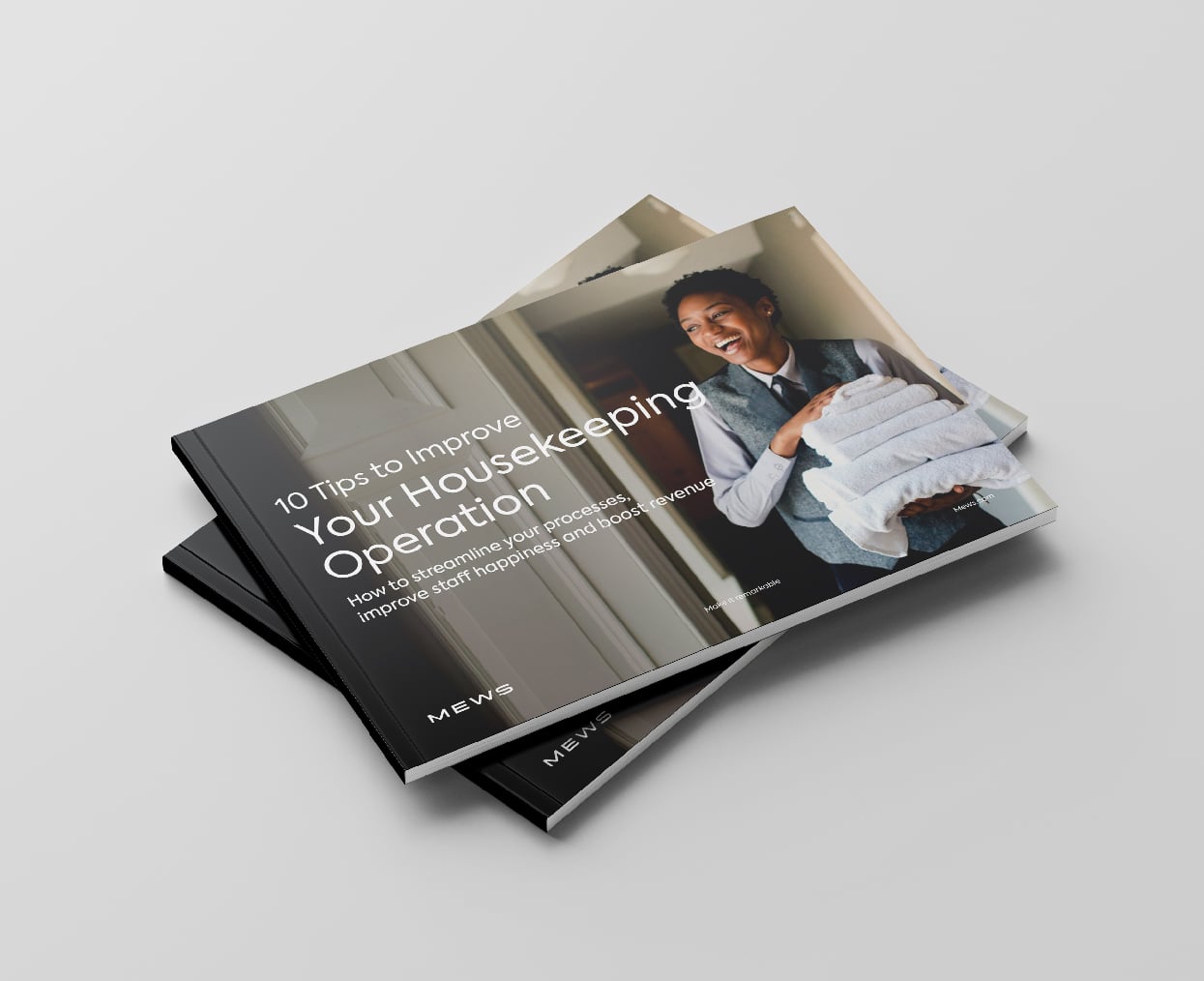
Download our guide "10 Tips to Improve Your Housekeeping Operation"
What is housekeeping in hotel operations?
What is housekeeping in hotel operations?
Housekeeping ensures rooms are clean, stocked and ready for arriving guests. It directly controls room availability and shapes guest satisfaction through consistent quality standards.
How do hotels improve room housekeeping efficiency?
How do hotels improve room housekeeping efficiency?
Hotels increase housekeeping efficiency through automated scheduling, real-time reporting tools and standardized checklists. Technology reduces manual coordination and enables faster turnaround between guests.
What tools support hotel housekeeping teams?
What tools support hotel housekeeping teams?
Digital task management apps, integrated communication platforms and automated reporting systems streamline the workflows of hotel housekeeping teams. Mobile technology allows instant room status updates from any location.
How often should housekeeping workflows be reviewed?
How often should housekeeping workflows be reviewed?
Review workflows quarterly to identify bottlenecks and adapt to seasonal demand changes. Major operational changes warrant immediate workflow assessment and adjustment.
What training improves housekeeping productivity?
What training improves housekeeping productivity?
Cross-training staff on multiple room types increases scheduling flexibility. Regular sessions on new technology and quality standards maintain consistent performance levels.
Written by

Eva Lacalle
Eva has over a decade of international experience in marketing, communication, events and digital marketing. When she's not at work, she's probably surfing, dancing, or exploring the world.